


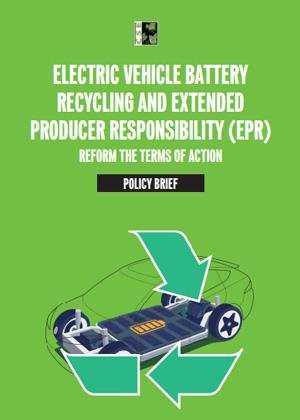
Port Blair (Sri Vijaya Puram): The Andaman & Nicobar Pollution Control Committee (ANPCC) has begun tightening the implementation of the Battery Waste Management (BWM) Rules, 2022, with a clear focus on ensuring that lead-acid battery recyclers meet new Extended Producer Responsibility (EPR) requirements. The move follows directions issued by the Central Pollution Control Board (CPCB) and decisions taken at the 4th Implementation Committee Meeting on the BWM Rules, particularly concerning the generation of EPR credits by recyclers.
At present, EPR credits are permitted for recyclers producing both Re-Melted Lead (RML) and Re-refined Lead (RRL). However, the ANPCC has pointed out that RML is only an intermediate product and requires further refining to produce RRL—the battery-grade lead used in manufacturing new lead-acid batteries.
Accordingly, a one-year transition period has been granted to lead-acid battery recyclers to upgrade their facilities for producing RRL. Once the transition period ends, EPR credits will no longer be generated for RML production and will be restricted to recyclers producing RRL.

As part of the compliance exercise, the ANPCC has now sought public assistance in identifying any lead-acid battery recyclers operating in the Andaman & Nicobar Islands.
Members of the public who have information about such recyclers have been asked to share the details with the Member Secretary, ANPCC, Department of Science and Technology, A&N Administration, Dollygunj, Sri Vijaya Puram, South Andaman, by August 20, 2026.

Information can also be submitted via email at dstpcc-andamans@and.nic.in.
The initiative is aimed at ensuring that battery recycling in the Islands remains aligned with national environmental standards while preventing EPR benefits from being extended to processes that do not produce battery-grade recycled lead.
Caption: ANPCC seeks public help to identify lead-acid battery recyclers as EPR rules tighten