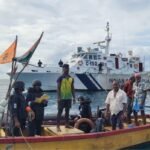



Port Blair (Sri Vijaya Puram) : The Andaman and Nicobar Islands are taking a significant step from traditional fishing towards technology-driven marine farming, with open-sea cage culture emerging as a promising new frontier for boosting fish production and creating sustainable livelihood opportunities. The Secretary (Fisheries), Andaman and Nicobar Administration, accompanied by senior officials of the Department of Fisheries, recently visited Chidiyatapu in South Andaman to assess the progress of commercial open-sea cage culture projects and review the mariculture initiatives being undertaken by private firms.
Two firms—M/s Aqua World Exports and M/s Canares Aquaculture LLP—are currently operating cage culture projects in leased sea areas allotted by the Department of Fisheries. The initiative seeks to diversify fisheries activities, increase marine fish production and promote the sustainable utilisation of the Islands’ vast marine resources.
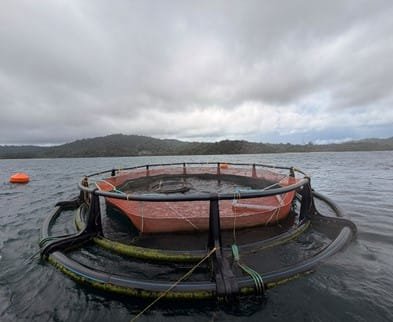
The projects use HDPE circular cages, each measuring 10 metres in diameter, under an open-sea cage culture system. Eight cages are currently available at the site, with Asian Seabass (Barramundi) being cultivated as the principal species because of its commercial importance and market potential.

The scale-up from tiny fingerlings to marketable fish is already visible. The first batch was stocked on May 30, 2026, with around 20,000 Asian Seabass fingerlings, each measuring about 1.5 inches and weighing approximately 0.4 gram. The fish have since recorded substantial growth, with the average body weight now touching around 150 grams.
Officials reviewed stocking density, feeding, fish growth, stock maintenance and cage-management practices during the field visit. The fish are currently being supplied high-protein, high-fat feed, with daily consumption estimated at around 20 kg.

If growth and culture conditions remain favourable, the first batch is expected to reach harvest size by April 2027. A successful harvest could provide a crucial demonstration of the commercial viability of open-sea cage farming in the Islands and encourage more entrepreneurs to enter the emerging mariculture sector.
The Department, meanwhile, stressed the need for scientific management, including appropriate stocking densities, regular monitoring of fish health and growth, efficient feeding, cage maintenance and strict adherence to environmental and biosecurity norms.
The Administration sees mariculture as more than an alternative source of fish. By increasing production through controlled marine farming, the sector could help create new livelihood opportunities while easing pressure on wild fish stocks.
The Fisheries Department is now working towards allotting additional sites for open-sea cage culture as well as seaweed cultivation, signalling an expansion of the Islands’ nascent mariculture economy.
The Chidiyatapu initiative, therefore, could become an important test case for the Islands’ transition towards sustainable, technology-based marine aquaculture, potentially transforming the way fisheries resources are produced and livelihoods are supported in the years ahead. The field visit was also undertaken in accordance with the latest directions of the Chief Secretary to Secretaries and Directors to undertake frequent field visits and monitor development initiatives on the ground.