



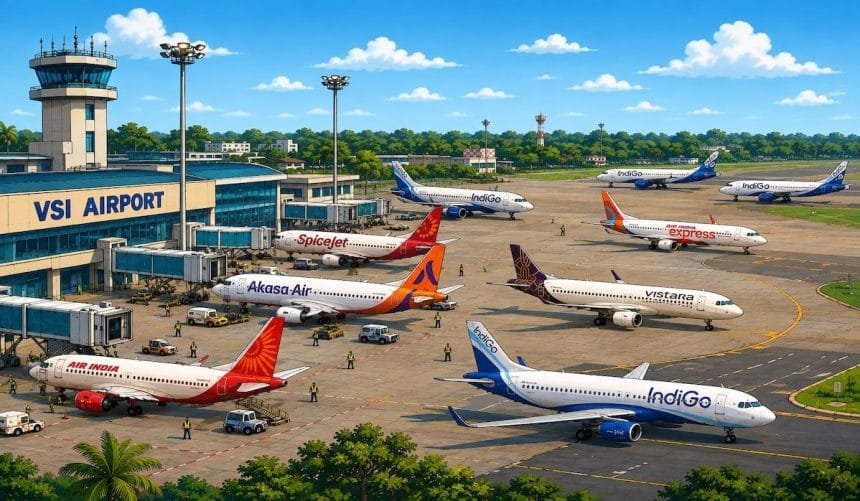
Port Blair (Sri Vijaya Puram): After months of anxiety over shrinking air connectivity and soaring ticket prices, the prospect of a sharp increase in flights between the Andaman and Nicobar Islands and mainland India has come as a major relief for Islanders, businesses and the tourism sector. From the present situation of barely around 36 flights a week, the number of flights to and from Sri Vijaya Puram is expected to rise significantly from September onwards, with projections indicating around 88 weekly flights in September, 126 in October, 147 in November and a whopping figure of more than 175 flights a week by December. The Andaman and Nicobar Chamber of Commerce has hinted at this projection earlier this week at Port Blair highlighting the efforts made by the Chamber and others in this direction.
If the proposed increase materialises, it would mark a dramatic improvement in air connectivity for the geographically isolated Islands and could bring much-needed relief to thousands of Islanders who depend on air travel for medical treatment, higher education, employment, business and family emergencies. However, even as the prospect of more flights is being widely welcomed, one crucial question remains: Will the substantial increase in the number of flights finally lead to a meaningful reduction in airfares?
For long, Islanders have been facing the twin problems of inadequate flight connectivity and exorbitant ticket prices. Whenever the number of flights declines and seats become scarce, fares on the Island-mainland sector shoot up dramatically, often placing urgent travel beyond the reach of ordinary residents.

A ticket to Chennai, Kolkata, Delhi or other mainland destinations can cost Islanders substantially more than comparable journeys between major mainland cities. During periods of acute shortage, one-way fares have reportedly touched several times the normal rates, causing enormous hardship to families compelled to travel at short notice.
Unlike people living in mainland India, Islanders have no road or rail alternative. A resident of the Islands cannot simply board a train, take a bus or drive to another major city when air tickets become unaffordable. While passenger ships provide an important alternative link, sea travel is time-consuming and cannot meet the requirements of patients, students, job seekers and those travelling during emergencies.

It is this unique geographical disadvantage that has repeatedly strengthened the demand for a special airfare policy for the Andaman and Nicobar Islands.

For years, there have been calls for subsidised or concessional airfares for Islanders, on the lines of special connectivity support available for certain sectors in the North-Eastern region. However, despite repeated representations, the demand for a structured and sustained airfare subsidy or protection mechanism for the Islands has remained largely unheard.
The Phoenix Post understands that the proposed increase in flight operations is, therefore, undoubtedly a welcome development and greater capacity and more seat availability should ideally create conditions for fares to moderate. But Islanders have seen temporary increases in flights before, only to face renewed shortages and another round of spiralling ticket prices later.
More Read

The real test, therefore, will not merely be whether the number of weekly flights touches 175 by the year-end, but whether the expanded connectivity is sustained throughout the year and translates into affordable tickets. For the Andaman and Nicobar Islands, air connectivity is not a luxury—it is a lifeline. The increase in flights has raised hopes. It is now for the authorities and airlines to ensure that those hopes finally translate into affordable travel for the people of the Islands.