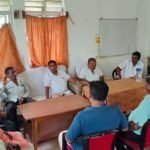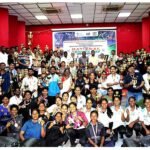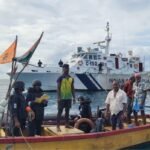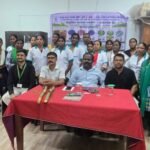



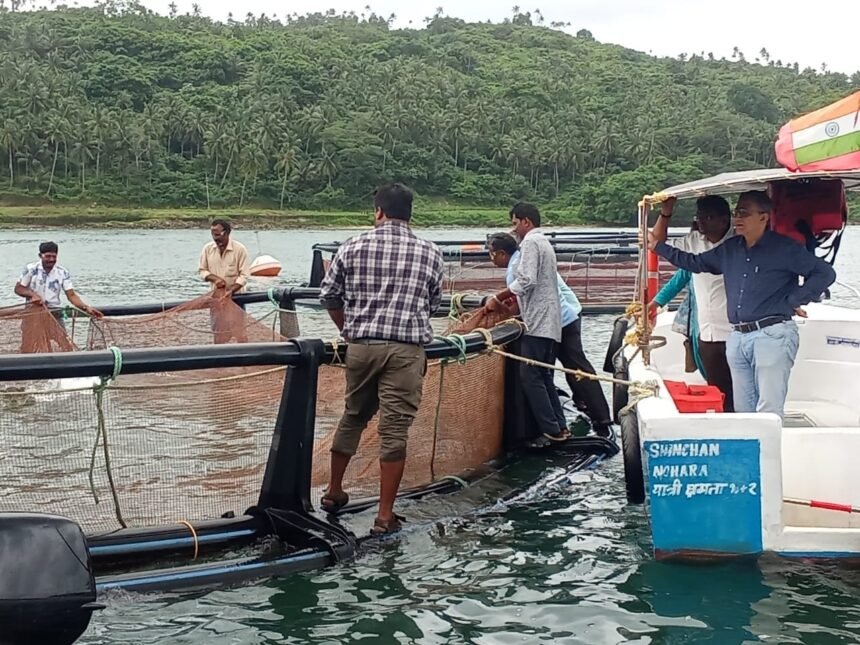
Port Blair (Sri Vijay Puram): With the Andaman and Nicobar Islands surrounded by vast and resource-rich waters, the need to promote mariculture as a sustainable source of livelihood and economic security for island communities is gaining increasing importance. Harnessing the potential of the sea through scientific and sustainable fish farming could open new avenues of employment and income generation, particularly for coastal and fishing communities. In this direction, the Department of Fisheries, A&N Administration, with technical support from ACOSTI-NIOT, Dollygunj, organised a two-day training programme on ‘Mariculture Activities for Livelihood Security’, with special emphasis on open-sea cage culture, under the Agricultural Technology Management Agency (ATMA) scheme.
The training was conducted with the technical guidance of Dr. Aron Santhosh Kumar Y, Project Scientist-I, ACOSTI-NIOT, and Raj Kiran Lakra, Project Scientist-I, ACOSTI-NIOT, along with representatives of the Department of Fisheries and Sagar Mitras. A total of 20 participants received both theoretical and practical exposure to various aspects of mariculture, with particular focus on cage culture practices.
The sessions underlined the importance of scientific cage management for maintaining the health and growth of cultured species, while ensuring the optimum and efficient utilisation of mariculture infrastructure.

For the geographically scattered island territory, where livelihood opportunities remain limited in several coastal areas, mariculture holds considerable promise as an alternative and supplementary source of income. The vast marine expanse surrounding the Islands offers significant potential for expanding sustainable aquaculture activities, provided local communities are equipped with the necessary skills, technology and institutional support.
The training programme was therefore seen as an important step towards encouraging more people, particularly those dependent on traditional fishing, to explore scientific mariculture as a viable livelihood option.

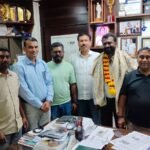
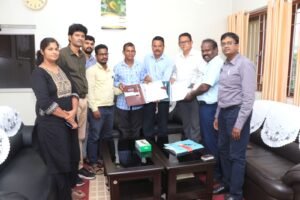
At the conclusion of the programme, training certificates and essential tools were distributed among all 20 participants to encourage them to put the knowledge and skills acquired during the sessions into practical use.
The initiative has once again highlighted the need for sustained efforts to take mariculture beyond pilot projects and training programmes and promote it on a wider scale across the Andaman and Nicobar Islands, enabling coastal communities to turn the Islands’ abundant marine resources into a source of secure and sustainable livelihoods.