


Port Blair (Sri Vijaya Puram): The Andaman and Nicobar Islands are looking to significantly scale up mariculture as a new growth avenue for marine fish production, livelihoods and sustainable use of ocean resources, with the Fisheries Department set to intensify and expand ongoing initiatives across suitable locations. The thrust on taking mariculture beyond individual pilot projects and developing it on a larger scale emerged during Chief Secretary Gyanesh Bharti’s visit to Chidiyatapu, where he reviewed ongoing open-sea cage culture and seaweed farming initiatives.
At the open-sea cage culture site, the Chief Secretary inspected cages leased by the Fisheries Department to beneficiaries and reviewed fish growth, feeding practices and overall operations. The project currently has eight circular cages, each nine metres in diameter, with Sea Bass culture launched in May 2026 through stocking of 20,000 fingerlings.
The fish, initially weighing about 0.4 gram each, have now reached an average weight of around 160 grams, indicating encouraging growth. With high-protein and high-fat feed being used, harvesting is targeted for July 2027, when the fish are expected to reach a marketable weight of about one kilogram.

The progress has strengthened the case for systematic expansion of open-sea cage culture at suitable sites, potentially creating additional avenues for islanders to enter commercial marine farming while augmenting conventional fisheries production.
The Chief Secretary also reviewed the seaweed cultivation programme at Chidiyatapu, where Gracilaria edulis and other locally available species are being assessed for their suitability under island conditions. The Fisheries Department has already allotted 7.67 hectares for commercial-scale seaweed farming, marking a move towards taking the activity beyond the trial stage.

The proposed species include Gracilaria edulis, Gracilaria salicornia, Ulva lactuca and Caulerpa lentillifera (Sea Grape). Trial cultivation of Sea Grape is currently underway alongside assessment of other indigenous seaweed resources.
The focus now is on optimising the benefits of these initiatives through wider adoption, technology-based farming practices, beneficiary participation and identification of additional suitable locations across the archipelago.
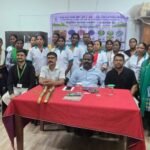
Interacting with beneficiaries and technical personnel, Bharti underscored the potential of mariculture to increase marine production, generate new livelihood and entrepreneurial opportunities and ensure more productive and sustainable utilisation of the Islands’ rich marine resources. The ongoing initiatives are receiving technical support from ACOSTI-NIOT, Dollygunj, providing scientific and technical inputs for strengthening mariculture practices in the Islands.