


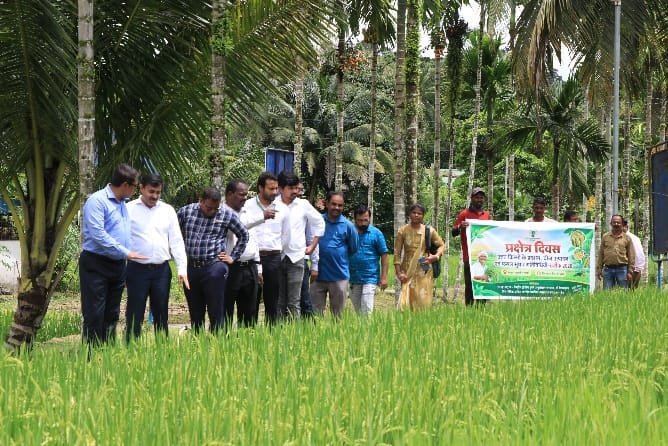
Port Blair(Sri Vijaya Puram): Efforts to conserve and multiply the Andaman Islands’ traditional rice varieties received fresh impetus as the ICAR–Central Island Agricultural Research Institute (ICAR-CIARI) showcased its seed production activities involving farmers’ varieties at its Bloomsdale Research Farm, Chouldari, during the Kharif 2026 Field Day on Friday.
The initiative seeks to ensure the conservation, multiplication and wider availability of locally adapted rice genetic resources, which hold potential for strengthening the Islands’ agricultural resilience and supporting future crop improvement programmes.
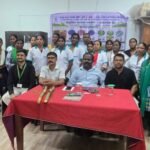
The Field Day brought together around 40 participants, including ICAR-CIARI Director Dr. Jai Sunder, Director of Agriculture, A&N Administration, Shri D. Basantia, scientists, heads of divisions, technical personnel and representatives of ICAR-KVK, South Andaman. During the field demonstrations, scientists highlighted seed production plots of different rice varieties, upcoming improved varieties, aromatic rice, high-yielding and multiple-stress-resistant rice lines, besides ongoing crop improvement and crop management research.

A key focus was the Institute’s rice genetic resource conservation programme. More than 200 rice germplasm accessions are being maintained and conserved for future breeding and research. Participants were also briefed on the production of seed of farmers’ rice varieties from the Andaman Islands—an effort aimed at safeguarding locally adapted varieties and making planting material more accessible to farmers.
The demonstrations also covered trials to identify suitable cultivation windows for rice and pulses, natural farming practices in rice, pulses and oilseeds, and All India Coordinated Research Project (AICRP) trials on rice. Ivy gourd germplasm and evaluation trials were among the other research activities showcased. Dr. M. Muruganandan, Head of the Fisheries Science Division, outlined the potential of rice-cum-fish cultivation as an integrated farming system for the Islands, stressing its scope for improving farm productivity and income through more efficient use of available resources.
The field-level interaction provided an opportunity for agricultural officials, KVK personnel, scientists and other stakeholders to discuss the challenges facing island agriculture and the need for location-specific solutions.

Speaking on the occasion, Director of Agriculture Shri D. Basantia emphasised the importance of quality seed availability, particularly for pulses, and stronger coordination among research, extension and development agencies. He also called for implementation of the agricultural action plan prepared by ICAR-CIARI scientists for the comprehensive development of agriculture in the Islands.
ICAR-CIARI Director Dr. Jai Sunder stressed the need to strengthen linkages between research institutions, seed production agencies, extension services and farmers to accelerate the dissemination of improved technologies and varieties suited to island conditions. He also highlighted the Institute’s Research Action Plan aimed at addressing the specific agricultural needs of the Andaman and Nicobar Islands.