



India has a long and deeply rooted tradition of charitable and voluntary action. For generations, individuals, community groups and charitable institutions have come together to respond to social needs, often through informal arrangements shaped by local circumstances and community participation. Over time, however, the voluntary sector has changed considerably. NGOs today need to understand not only the social purpose they seek to serve but also the legal, financial and administrative framework within which they operate. Registration, taxation, financial management, governance, record-keeping and reporting have become important aspects of an organisation’s functioning, along with growing expectations of transparency and accountability.
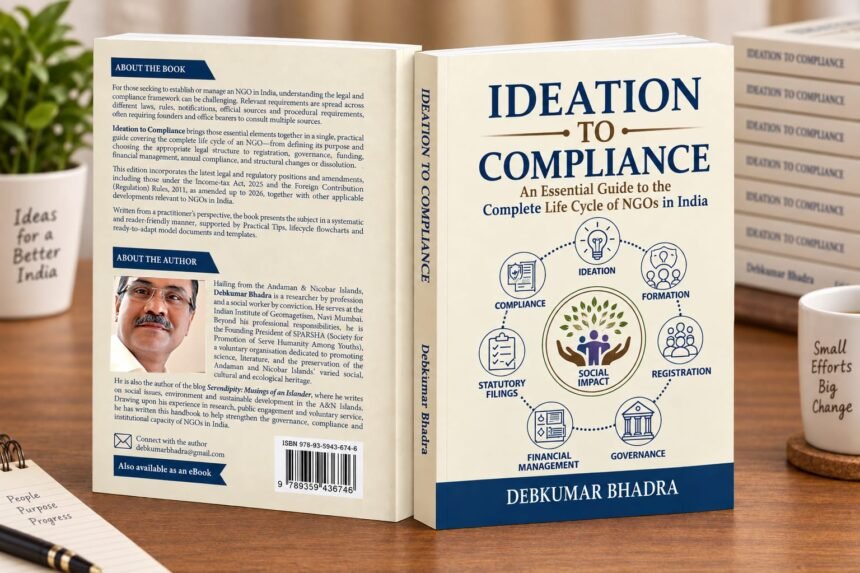
For those planning to enter the non-profit sector, understanding how an NGO is established and managed can therefore be as important as the social cause that inspires it. It is against this changing landscape that Andaman-based author Debkumar Bhadra has brought out Ideation to Compliance: An Essential Guide to the Complete Life Cycle of NGOs in India.
In a recent interview with The Phoenix Post, Bhadra explained that the book grew out of his experience of establishing SPARSHA (Society for Promotion of Serve Humanity Among Youths). He found that information relevant to NGOs was available through different laws, rules, government notifications, portals and procedural resources, but was often scattered across different sources.

For an aspiring founder, the challenge is therefore not simply finding information but understanding which requirements apply at different stages and how they fit together. Ideation to Compliance seeks to bring these aspects into a single, practical framework.
Rather than treating registration as the end of the process, the book looks at an NGO as an institution with a continuing life cycle. It takes the reader from the initial idea and selection of a legal structure through registration and statutory requirements, and then into governance, financial management, record-keeping and continuing compliance.

The book explains the principal legal forms through which charitable and voluntary activities can be organised and outlines the responsibilities that arise once an organisation begins functioning. It also includes model documents and templates intended to help readers convert legal and administrative requirements into practical organisational processes.

The handbook is particularly relevant to first-time founders who may have a clear idea about the social issue they want to address but limited knowledge of the systems required to run an NGO. A strong social purpose, the book suggests, needs to be supported by proper procedures, responsible financial management and transparent decision-making.
The growing formalisation of the voluntary sector has also made accountability an important part of institutional credibility. For an NGO, this can mean maintaining proper financial records, complying with applicable laws, taking decisions transparently and ensuring that resources and activities remain aligned with its stated objectives.
More Read

In this context, compliance is more than completing forms or meeting deadlines. It is part of building an organisation that can function with clarity, continuity and credibility and remain accountable to its beneficiaries, donors, members and other stakeholders.
That is the space Ideation to Compliance seeks to address. The book is intended for NGO founders, trustees, governing-body members, social entrepreneurs, CSR professionals, accountants, researchers and students. The journey from establishing a voluntary organisation in the Andaman and Nicobar Islands to writing a handbook for readers across India gives the publication its distinctive local-to-national character. The Kindle edition of the book by Debkumar Bhadra is already available on Amazon, while paperback and hardbound editions are scheduled for release sometime in October.