


Port Blai(Sri Vijaya Puram): Dr. Dinesh Sharma assumed office as the 14th Lieutenant Governor of the Andaman & Nicobar Islands on Tuesday, taking charge at a crucial juncture as the strategically important archipelago prepares for a major development push amid growing public expectations for responsive and accessible governance.
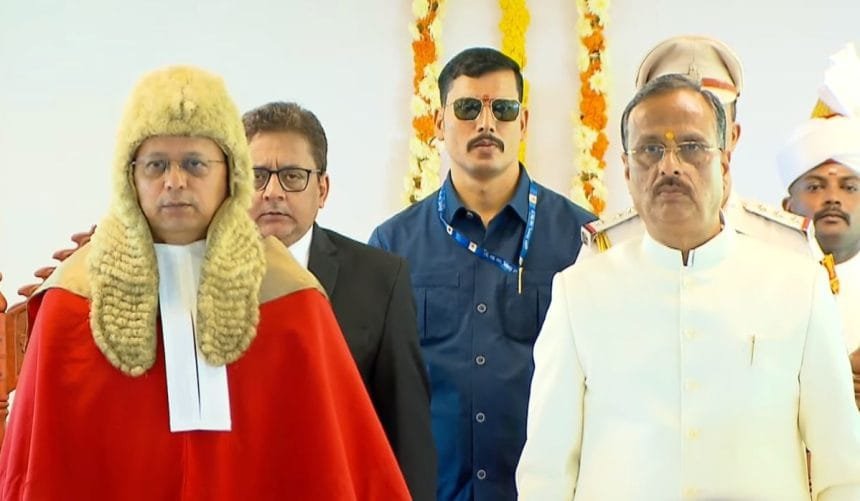
The new Lt Governor was administered the Oath of Office and Oath of Secrecy by Chief Justice of the Calcutta High Court, Justice Ravindra Vithalrao Ghuge, at a ceremony held at Lok Niwas here this morning.
Chief Secretary of the Andaman & Nicobar Administration, Gyanesh Bharti, read out the Warrant of Appointment, formally marking Dr. Sharma’s assumption of office.

Following the swearing-in, the new Lieutenant Governor inspected the Guard of Honour presented by the Andaman and Nicobar Police. Invited guests later met and congratulated Dr. Sharma, with a high tea hosted on the occasion.
Dr. Sharma takes over at a time when several projects of national importance are taking shape in the Islands. The proposed Great Nicobar Island Project, among the most significant of these, carries implications extending beyond the Union Territory, with its strategic, developmental and ecological dimensions likely to remain closely watched.

The new Lieutenant Governor’s tenure is therefore expected to be marked by the challenge of balancing national priorities with the aspirations and concerns of the Islanders. Beyond major infrastructure and development initiatives, public accessibility and direct engagement with citizens are likely to be important expectations from the new administration.

A regular Jan Sunvai programme could provide Islanders with a direct platform to place their grievances and concerns before the Lieutenant Governor, strengthening the connection between Lok Niwas and the people across the archipelago. For an island territory facing persistent concerns over connectivity, healthcare, infrastructure and public services, a more accessible grievance-redressal mechanism could help ensure that the voices of ordinary citizens receive greater attention in the decision-making process of the administration.